
Steel-Framed Homes · Homeowner Guide
How Long Does a Steel-Framed House Last?
November 17, 2026 · 4 min read
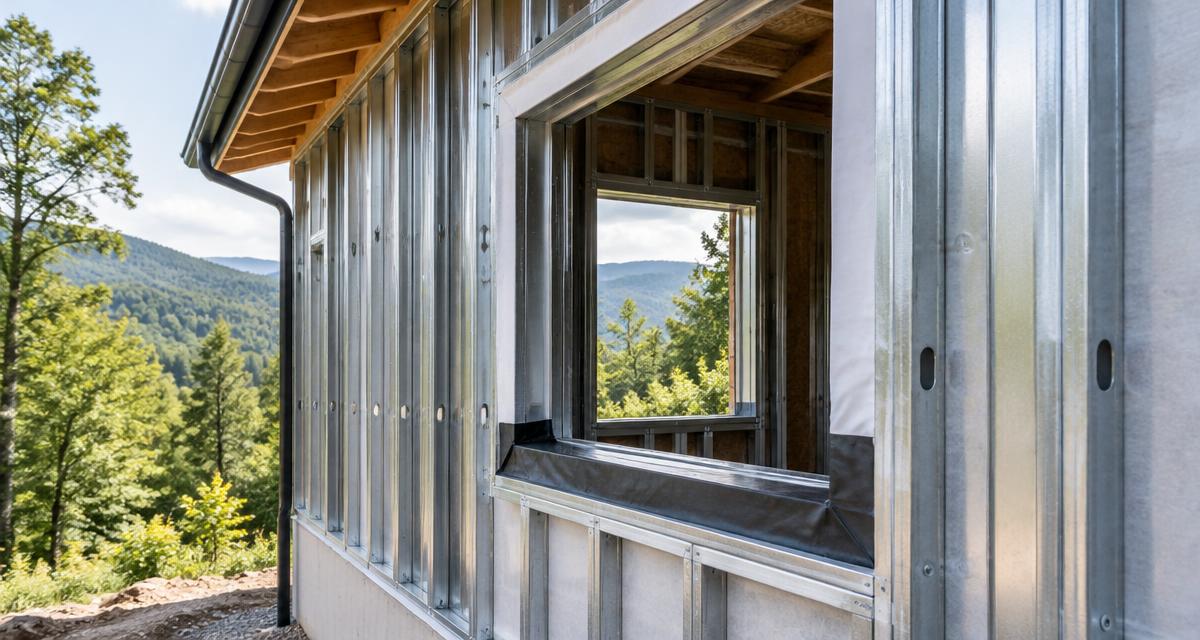
A steel-framed house can serve generations when the frame is designed for its exposure and kept dry. There is no single lifespan you can assign to every steel-framed home. A galvanized stud inside a dry wall and a piece of steel repeatedly wetted by a leaking deck connection face very different conditions.
For homeowners planning a custom home around Asheville or elsewhere in Western North Carolina, the practical question is how the house will keep water away from the frame through years of rain, repairs, and changes to the exterior.
What protects the frame?
Residential cold-formed steel framing typically has a protective metallic coating. Galvanized steel uses zinc, which helps protect the steel underneath. In a dry, enclosed wall, that coating is exposed to much milder conditions than framing exposed to weather or chronic dampness. The design team should specify framing and fasteners suited to the conditions they will actually face.
Steel studs do not rot, and termites do not eat steel. A steel-framed house still contains materials such as wood trim, cabinets, and sometimes wood sheathing. Those materials still need protection from moisture and pests. Read our steel-versus-wood framing comparison.
The details that affect service life
Start with where rain goes. At a window, flashing should direct water back outside if it gets behind the siding. At the bottom of a wall, the assembly needs a clear path to drain. Where a porch or deck attaches to the home, the connection should preserve that drainage path. On a mountain lot, grading and roof runoff also affect how much water reaches the foundation.
Condensation deserves attention, too. Steel conducts heat readily, so the insulation and air-sealing details help control temperatures at the frame and limit the movement of moist air into the wall. The right assembly depends on the climate, the wall materials, and how the wall can dry. See how we control thermal bridging in steel-framed homes.
What will you maintain over the years?
Most homeowners will spend more time looking after the roof, gutters, siding, and sealants than thinking about the studs. Those components help keep the structure dry. After a heavy storm, look for overflowing gutters, water collecting against the foundation, or staining around windows and door openings. If a stain keeps coming back, trace the source before patching the finish.
When you add a deck, replace windows, or run a new exterior vent, ask how the work will tie into the existing water and air barriers. Keeping those layers continuous through renovations helps the house perform the way it was designed.
What to ask before you build
Ask your builder to show you two details on the drawings: the bottom of a window and the point where an exterior wall meets the foundation. Follow the path water would take if it got behind the siding. Then ask which framing and fasteners are specified in areas that may see moisture. Those details give you a more useful basis for comparing proposals than a lifespan claim on its own.
A durable steel-framed house starts with a frame protected for its conditions and an enclosure that sheds water, can dry, and can be maintained. Plan those details early, while they are still easy to change on paper.
Editorial source