
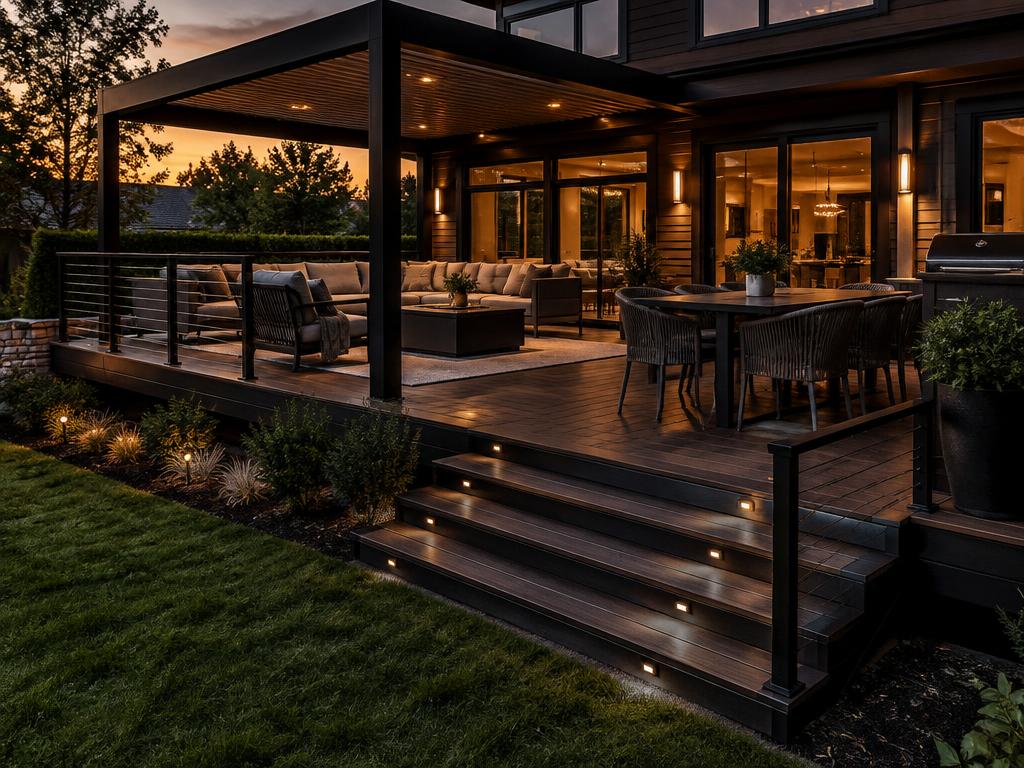
Steel Deck Framing
A beautiful deck can be one of the greatest accents to a home. Why watch it rot, crack, shift, and deteriorate? A steel-framed deck provides a lifetime of enjoyment without the problems of wood.
The problem with wood decks
Decks are made of posts, joists, decking, and railing — and when they're wood, every one of those is susceptible to problems.
Rotting Posts
Replacing a rotted post means supporting the whole deck while the post is swapped out. The post itself isn't expensive — the labor and equipment can cost thousands.
Rotting Joists
Joist rot isn't visible from above, and unless you spend a lot of time under your deck, it can be a nightmare to replace. Severe damage can mean replacing the entire deck.
Decaying Deck Boards
Wooden decks deteriorate from underneath, where they're unsealed and exposed to warm, moist air. Often you only notice once decay has worked up through the boards.
Termites
A homeowner's worst nightmare. Termites can eat up to a pound of wood each day — imagine what months or years under your deck can do.
Constant Upkeep
Wood decks need regular staining and sealing. Neglect them and the stain fades, the wood cracks, and the appearance suffers. Steel with composite needs little more than soap and water.
The steel difference
A steel-framed deck combined with composite decking can increase the resale value of your home. The last thing you want is an inspector finding rotting or insect-ridden wood anywhere in your deck.
Hybrid decks hide wood below and non-wood above — but just because you can't see it doesn't mean it won't cause problems. Steel is your strongest and best defense against nature and insects.
Any type of decking and railing can be combined with a steel frame. Modern composite decking has the look of wood without the warping, cracking, splitting, swelling, or shrinking — and never needs sealing or staining.
Just like wooden decks, steel-framed decks can be built to any size, style, or look you desire.