
Decorative Concrete and Hardscaping
Stamped Concrete vs. Pavers: Which Is Better for Your Patio?
November 23, 2026 · 4 min read
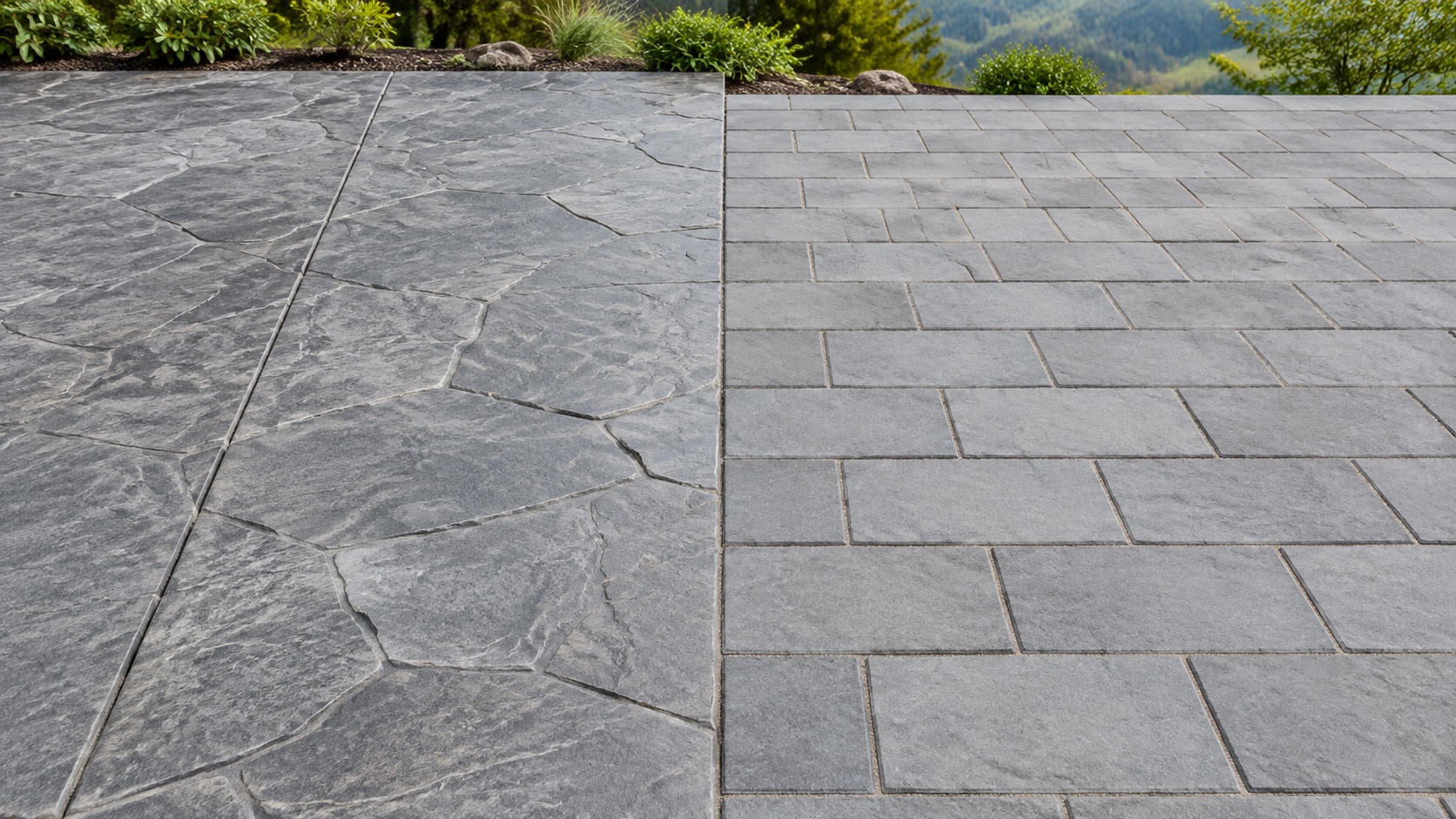
A patio outside an Asheville kitchen might be where you eat most summer evenings. One tucked into a hillside might sit under trees, collect wet leaves, and catch runoff every time it rains. Both could look great in stamped concrete or concrete pavers. The better choice depends on how the patio will drain, how you want it to look, and what kind of repairs you’re willing to live with.
Stamped concrete is a poured slab textured to resemble stone, brick, or another material. Concrete pavers are individual units laid over a prepared base. If you want a continuous surface with a stone pattern, start by looking at stamped concrete. If you want to lift and reset a small area later, pavers have the advantage.
Compare the surfaces at full scale
Stamped concrete can give a patio the look of large pieces of slate without laying each piece individually. The installer still needs to plan joints in the slab, so ask where the lines will fall before choosing a pattern. On a patio off the kitchen, a joint aligned with a doorway or a break in the patio shape may be less noticeable than one crossing the middle of the dining area. Look at a completed installation or a sample large enough to show how the pattern repeats. Concrete Network, Stamped Concrete
Pavers give you more control over borders and transitions. You might use one color across the dining area and turn the pattern at the edge of a path to the garden. Bring home a few samples and look at them in sun, shade, and when wet. If the patio will hold a dining table, set a chair on a sample installation. Deep texture or wide joints can make a chair wobble or catch a narrow leg.
Follow the water before choosing the finish
On a sloped Western North Carolina lot, look uphill first. Water can reach the patio from the roof, a driveway, or the hillside itself. Walk the site during or just after a rain and note where water collects. Then ask each installer where water will leave the finished patio and how that route will protect the house and nearby slopes. A low spot at the bottom of the steps will be inconvenient with either surface.
If reducing runoff is one of your goals, ask about a purpose-designed permeable paver system. It uses openings between units and an aggregate base that temporarily stores water and can allow it to soak into suitable soil. Conventional pavers also have visible joints, but those joints alone don’t make the patio a permeable system. The installer should explain where water goes when the soil can’t absorb it quickly enough. Concrete Masonry & Hardscapes Association, Segmental Pavement
Picture the repairs you might need
A stamped slab can crack even when joints have been planned. Ask what a repair would look like if a crack crossed the stamped pattern. Blending a patch into older colored concrete can be difficult, especially in an open area where the whole surface is visible at once. If the installer specifies a sealer, ask how to clean the patio, when to reseal it, and how the finished surface feels underfoot when wet. Concrete Network, Repairing Stamped Concrete Problems
With pavers, you can usually lift units in a small area to correct local settlement or reach a buried line, then reset them after the work. That’s worth considering if you may add landscape lighting or irrigation later. Keep a few spare units from the original order so you have a match if one breaks. Ask who will maintain the joint material and what the installer will use to hold the patio edges in place.
Compare bids for the same patio
Ask both contractors to price the same footprint, demolition, excavation, drainage, steps, and cleanup. One quote might include hauling soil out of a tight backyard while another assumes it can stay on site. Those differences can matter more than the surface material, especially when equipment access is limited. Ask to see the slab and joint plan on the concrete bid and the base, bedding, and edge restraint on the paver bid.
For an open terrace with a consistent stone pattern, stamped concrete may be the better fit. For a patio you expect to modify or repair in sections, pavers are worth a closer look. Compare both on the same site plan so you can see how each proposal handles the part you’ll notice after the first heavy rain.